Online Master in Management (MiM): Business Sustainability
| Format: 100% online | Duration: 2 years, part time | Next start date: 28 September 2026 |
| Total course fee: £13,500 | Applications open: Apply now | Intakes: January, June and September |
Course overview
A MiM Master in Management is a postgraduate degree that provides a comprehensive introduction to business and helps you grow into a confident leader. Unlike an MBA, it’s designed for those who don’t yet have management experience, making it a great fit if you’re beginning your career or exploring a new path.
Embrace the critical priority of sustainability in today’s organisations and society. You don't need a management background or qualification to join this online MiM. You'll learn how to tackle sustainability challenges and promote ethical, responsible business practices.
You'll begin by building a strong foundation in essential management skills. Then, you'll take two specialised modules focused on sustainability, covering ethics, innovation, and social responsibility.
This pathway focuses on real-world sustainability challenges, equipping you with practical knowledge in sustainability reporting, environmental impact assessment, and ethical operations. It’s designed for future leaders who want to drive meaningful change through responsible business practices.
Each module combines academic theory with applied learning through case studies, group discussions, and scenario-based tasks. This approach gives you a well-rounded understanding of modern management in today’s complex business environment.
This online, part-time course will teach you how to prioritise sustainability within your management strategies. You'll gain the skills to make a positive impact on both your organisation and the environment.
Take this opportunity to build essential skills grounded in ethical and sustainable practices. Become a leader who shapes a better future for organisations and society alike.
What you’ll study
This online, part time course is one of three management pathways:
- MiM Master in Management
- MiM Master in Management (Logistics)
- MiM Master in Management (Business Sustainability)
Through this sustainability pathway, you will:
- gain insights into competitive strategy and decision-making
- explore ethical marketing practices and innovative strategies
- learn essential research methodologies for independent studies
- design, measure, and implement effective sustainability strategies using global standards
- develop skills in sustainability accounting, reporting, and greenhouse gas analysis, covering energy, water, waste, and biodiversity
- examine sustainable operations and supply chains, focusing on the triple-bottom-line and Circular Economy models
Each skill is reinforced through project-based assessments and critical analysis, equipping you to drive sustainable change in business.
Module overview
This course includes 10 modules, totaling 180 credits. Eight of these modules are core to all management pathways, while two modules, Sustainability Accounting and Reporting and Sustainable Business Operations, are specific to the sustainability pathway.
You’ll begin with Academic and Professional Skills for Managers, which provides a strong foundation in essential management principles.
After that, you’ll complete another seven modules, including the two pathway-specific modules. These modules are independent and are delivered in a different order for each intake.
The Master in Management concludes with a Quantitative and Qualitative Research module followed by the Dissertation module.
Core modules
The following seven modules are core to this course. They are included across all three management pathways.
Academic and Professional Skills for Managers (15 credits)
This module equips you with essential skills for leadership and effective management. These skills are grounded in frameworks from the Chartered Management Institute (CMI) and Chartered Institute of Personnel and Development (CIPD). Through a blend of theory and practical application, you’ll develop personal effectiveness, teamwork capabilities, and leadership acumen. Our focus on ethical and sustainable practices ensures your readiness for today’s dynamic, inclusive workplaces. You'll also enhance academic skills like critical thinking, effective writing, and information management, fostering lifelong learning and career resilience.
Accounting for Management (15 credits)
This comprehensive module explores both financial and management accounting, which are essential for effective organisational control and decision-making. You'll delve into financial statement preparation, understanding the recording, analysis, and application of financial data. We'll also cover management accounting, with a focus on tools for strategic planning and operational efficiency. You’ll learn about techniques for budgeting, investment appraisal, and performance management. This prepares you to handle diverse business scenarios and enhance decision-making processes.
Managing People and Organisations (15 credits)
This module explores the key aspects of managing individuals, teams, and organisations, bridging organisational behaviour and human resource practices. Through a mix of theoretical and practical learning, you'll gain insight into the psychological factors influencing management, HR strategies, and modern management practices. You'll be challenged to analyse how these principles apply in real-world scenarios. This will develop your teamwork, time management, and leadership skills. Interactive activities, case studies, and assessments will enhance your understanding and application of the concepts you’re introduced to.
Strategic Management (15 credits)
This module focuses on strategic management, and its pivotal role in guiding firms across various sectors to develop competitive advantages. It offers a robust introduction to the principles, analytical tools, and strategic implementation techniques necessary for understanding and executing global business strategies. Through lectures, case studies, and group discussions, you'll critically engage with concepts and frameworks from multiple schools of thought. You’ll then apply these insights to practical scenarios to enhance both your academic and practical management skills.
Strategic Operations Management (15 credits)
This module explores the integration of strategy and operations in today’s dynamic business environment. It also covers the critical aspects of cost, quality, flexibility, speed, and innovation. You’ll gain in-depth knowledge of operations management tools, behavioural management, and operational paradigms including Total Quality Management (TQM), Business Process Redesign (BPR), and Lean operations. Through lectures, case studies, and discussions, you'll develop skills in problem-solving, effective communication, and critical evaluation of supply chain theories. This prepares you to lead ethical and sustainable management practices in a global context.
Contemporary Marketing Practice: Ethics, Innovation, and Social Responsibility (15 credits)
This module explores the evolving world of marketing through the lens of ethics, innovation, and social responsibility. You’ll gain in-depth knowledge of branding, pricing, distribution, and international marketing. You’ll also develop essential skills such as market analysis and strategy planning. Through discussions, group projects, case studies and guest lectures, you’ll learn to apply ethical marketing practices to real-world situations. This prepares you for a successful marketing career with a strong ethical foundation.
Pathway modules
The following two modules are specific to this business sustainability pathway.
Sustainability Accounting and Reporting (15 credits)
This module equips you with essential skills in sustainability accounting and reporting. You’ll learn to prepare sustainability reports, calculate greenhouse gas emissions, and analyse an organisation's sustainability performance. Key topics include energy and water usage, waste management, and biodiversity impacts. You’ll engage in critical analysis, independent research, and apply global sustainability standards. Assessments include a project-based sustainability report and a comprehensive final exam.
Sustainable Business Operations (15 credits)
This module explores sustainable, ethical, and responsible operations within global supply chains. It emphasises the triple-bottom-line approach — economic, social, and environmental dimensions. You'll explore the critical need for sustainability due to limited planetary resources and get introduced to the Circular Economy. You’ll learn to assess, identify, and improve unsustainable practices in supply chains. This prepares you to implement sustainable models and business strategies effectively. The module is assessed via written coursework.
Final core modules
The Quantitative and Qualitative Research and Dissertation modules concludes your studies. They are included in all three management pathways.
Quantitative and Qualitative Research (15 credits)
In this module, you’ll be introduced to management research in theory and practice, focusing on both quantitative and qualitative methods. You'll learn about the research process, including:
- formulating research aims and questions
- conducting literature reviews
- using various data collection and analysis techniques
The module aims to enhance your understanding of research paradigms and methodologies, thus preparing you to undertake your own research projects. This will be especially useful for your dissertation. Lectures are enriched by the tutors’ expertise and practical experiences.
Dissertation (45 credits)
In this module, you'll conduct an extensive, independent investigation into a topic of your choice, culminating in a 10,000-word dissertation. The module tests your ability to conduct an autonomous, comprehensive analysis of a specific topic. Your dissertation should demonstrate master’s-level understanding. You’ll engage in topic identification, research design, and rigorous analysis. This should culminate in a well-structured dissertation that potentially aligns with business contexts or addresses generic management issues.
Your online study experience
Our online learning experience is built to empower busy professionals. You’ll study through a blend of guided content, live sessions, and collaborative projects - designed to keep you engaged and progressing at your own pace. With expert faculty, dedicated support, and a global peer network, you’ll be part of a vibrant academic community from wherever you are in the world.
Find out more about what it's like to study online with us:
Study experienceHear from Programme Director Rocchina Covucci as she speaks about online study at our recent Q&A session:
Read video transcript
Well, one of the standout features of the online Master in Management is is its flexibility. It's been specifically designed to to to, you know, with busy professionals in mind. So the programme is delivered as you might know a hundred percent online, part time, over two years, allowing you to fit you know your studies around work, most cases around family or around other any other commitments.
Meet the academic team
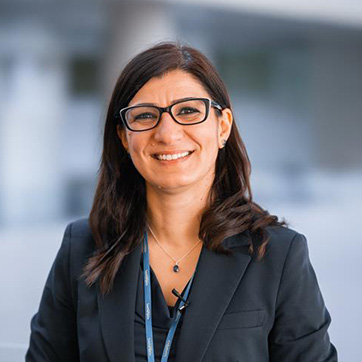
Rocchina Covucci
Senior Teaching Fellow in Accounting, Programme Director of online Master in Management courses
Rocchina is an ACA-qualified Chartered Accountant with over a decade of experience, she blends practical insights with academic theory.
View full profile
Dr Andrew Stainton
Principal Teaching Fellow, Module Leader of Strategic Management
Andrew's background spans software engineering, consultancy and higher education. His interests include business simulation, technology-enhanced learning and strategic decision-making.
View full profile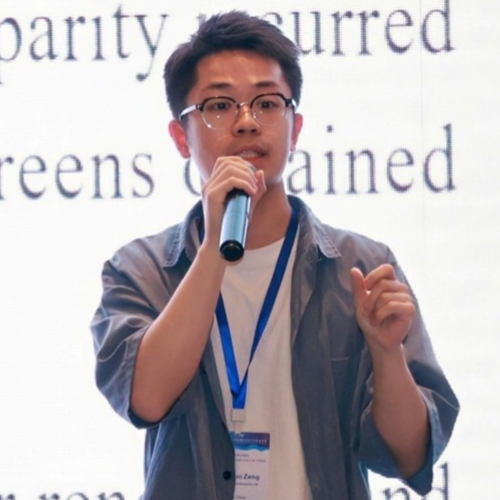
Dr Fanzhuo Zeng
Lecturer in the Department of HR Management and Organisational Behaviour, Module Leader of Strategic Operations Management and International Logistics
Fanzhuo completed his PhD in 2024 and joined the University of Southampton the same year. His research focuses on procurement management, platform operations, sustainable supply chains and probabilistic selling.
View full profile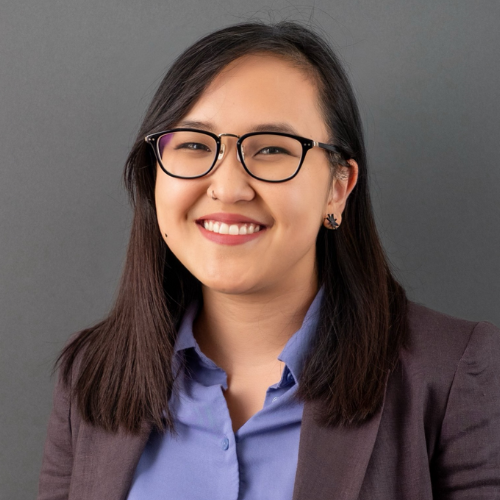
Dr Yizhen Lu
Lecturer in the Department of HR Management and Organisational Behaviour, Module Leader of Managing People and Organisations
Yizhen holds a PhD in Management from the National University of Singapore, and an MSc in Organisational Psychology from City St. George’s, University of London. Her research interests include emerging workplace trends and employee well-being.
View full profile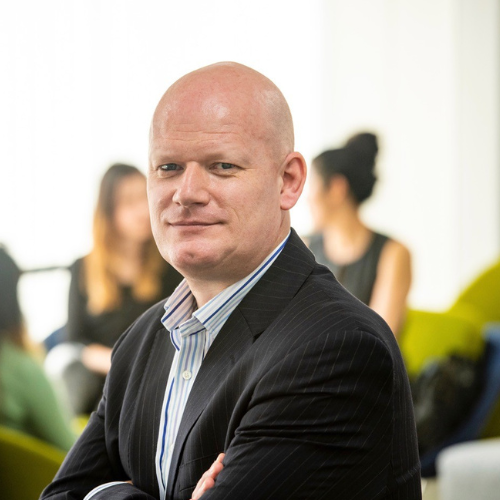
Tom Chapman
Module Leader of Contemporary Marketing Practice: Ethics, Innovation, and Social Responsibility
Tom is a Principal Teaching Fellow in Digital and Data-Driven Marketing with over 20 years’ experience in UK higher education. His interests include marketing ethics, sustainability, curriculum innovation and student employability.
View full profileReady to start your application?
Apply nowHow you’re assessed
Throughout your Southampton Online studies, you’ll be assessed through a range of different methods. You’ll take part in individual and group projects that blend theoretical understanding with practical application. You’ll also be assessed through individual reports, group case studies, and coursework. Group assignments focus on collaborative problem-solving, while coursework assesses both your theoretical knowledge and practical skills.
You’ll receive continuous feedback from your tutors through annotated copies of your assignments, and written evaluations. You’ll also receive ongoing guidance on your performance to ensure that you’re on track to pass each module.
Entry requirements
Standard entry requirements
To join the course, you’ll need:
- a minimum of a 2:1 class degree in any subject, equivalent to a UK bachelor’s degree; or
- a minimum of a 2:2 class degree in any subject, equivalent to a UK bachelor’s degree, and at least 3 years’ employment in a recognised graduate role
Non-standard entry requirements
If you don’t meet the standard academic requirements, don’t worry. We review applications on a case-by-case basis and will assess whether your background and experience are suitable for this course. We would strongly recommend holding:
- a minimum of a 2:2 class degree in any subject, equivalent to a UK bachelor’s degree
- additional relevant professional or industry qualifications, such as those accredited by professional bodies
Performance pathway
If you don’t have a 2:2 degree, you may be eligible for our performance pathway. On this pathway, you will take the first 15-credit module. Successful completion of this module provides you with an entry route to the full master’s degree.
For this entry route, you’ll need:
- a minimum of 10 years’ experience in a relevant field, with at least 2 years in a senior role
For guidance on your eligibility, please contact our adviser team.
Please note, if you're on the performance pathway, you won’t be eligible for support from Student Finance for the first module. You’ll need to pay the registration fee and the cost of the first module yourself. Once you successfully complete the first module, you can apply for Student Finance to cover the rest of the course, subject to eligibility and Student Finance’s terms and conditions.
Please also note that if you access the course via the performance pathway entry route you'll need to take two short study breaks during your studies, bringing the total length to 2 years and 4 months.
What you'll need to provide
Here’s what we’ll ask you to provide for both standard and non-standard entry routes:
- a detailed CV: Highlight your relevant professional and personal experiences
- a professional reference letter: A trusted referee should explain why you’re a strong candidate for this course
- a personal statement (300-500 words): Tell us about your interest in the course, how it aligns with your career goals, and how your experience so far has prepared you for success at master’s level
In your personal statement, highlight examples that demonstrate your abilities in:
- time management
- organisation
- communication
- teamwork
- personal responsibility
- critical thinking
- problem-solving
English language requirements
You’ll need to provide evidence of your English language ability equivalent to an IELTS (academic) score of 6.5. All components should have a minimum score of 6.0. For non-IELTS equivalents of this score, please refer to the table below:
| Test | Overall score | Minimum component score |
| TOEFL (including Home Edition) | 92 | Reading: 22 Writing: 21 Listening: 21 Speaking: 23 |
| Pearson PTE | 68 | No component below 64 |
| Duolingo | 120-125 | Literacy: 105 Conversation: 105 Comprehension: 110 Production: 85 |
Please note that you will not need to provide evidence of English language ability if:
- You’re a national of, or have completed a qualification equivalent to a UK degree in, one of the countries recognised for English language proficiency. Please contact our adviser team to confirm if your country qualifies.
- You can demonstrate that you’ve worked professionally in English for at least 2 years. In this case, a professional reference letter will be required.
- You have completed an undergraduate degree taught and assessed in English up to 2 years preceding the date of first enrolment at the University of Southampton. In the case of degrees taught by two or more partner institutions of which only one is taught and assessed in English, you must demonstrate that a minimum of 2 years have been taught and assessed in English.
- You have been awarded a degree that was fully taught and assessed in English between two and five years prior to the date of first enrolment at the University and can demonstrate that you’ve worked professionally in English for a minimum of 12 months in the last two years. In this case, a professional reference letter will be required.
Careers and opportunities
This MiM Master in Management (Business Sustainability) equips you with core management skills focused on sustainability, preparing you to tackle the challenges of modern business. As sustainability becomes a critical consideration for businesses globally, specialising in this area opens up a wide range of rewarding career opportunities.
You’ll study modules like Sustainability Accounting and Reporting and Sustainable Business Operations, where you’ll learn to conduct sustainability assessments, create sustainability reports, and implement sustainable strategies across global supply chains. The course also covers key issues such as greenhouse gas emissions, energy usage, waste management, and the Circular Economy, enabling you to balance economic success with social responsibility and environmental care.
This online, part time course combines academic knowledge with practical skills, boosting your employability across different sectors. Interactive learning, including case studies, group discussions, and real-world projects, ensures you can apply your learning in professional settings.
As a graduate, you’ll be prepared for roles such as:
- Sustainability Consultant
- Corporate Social Responsibility (CSR) Manager
- Environmental, Social, and Governance (ESG) Analyst
- Sustainability Operations Manager
- Sustainability Reporting Officer
- Sustainable Supply Chain Manager
These roles reflect the growing demand for leaders who can manage traditional business functions while driving sustainability initiatives.
Interested in online master's study? Your journey starts here.
Got questions about our courses? Need guidance with your application? Our team of advisers is here to help. Fill in the form below to register your interest, and they’ll contact you shortly.
Master in Management (Business Sustainability) FAQs
Course overview
What unique aspects does the Master in Management (Business Sustainability) offer?
This online course introduces core management principles while focusing on sustainability as a central business priority. You don’t need prior management experience. You’ll explore ethical practice, responsible leadership and how organisations can respond to environmental and social challenges.
The pathway equips you with practical tools for sustainability reporting, impact assessment and responsible operations, preparing you to lead positive change across diverse sectors.
Entry requirements
What are the entry requirements for the Master in Management (Business Sustainability)?
Applicants normally need a 2:1 class degree in any subject or a 2:2 class degree in any subject, and at least 3 years’ employment in a recognised graduate role. We also consider non-standard applicants based on professional background.
Full details are listed in the ‘Entry Requirements’ section of this page.
Assessments
What assessment methods are used in the course?
You’ll be assessed through individual and group projects, reports, case studies and coursework. These assessments blend theory with real world sustainability practice. Tutors provide regular feedback to help you stay on track throughout each module.
Course structure
What is the study mode for this course?
The course is delivered entirely online, letting you study flexibly around work and personal commitments.
What is the duration of the course?
The course duration is two years, part time.
If you access the course via the performance pathway entry route you'll need to take two short study breaks during your studies, bringing the total length to 2 years and 4 months.
Careers
What career outcomes can be expected from completing the Master in Management (Business Sustainability)?
Graduates will be ready for roles focused on sustainability and responsible business practice. Career paths include Sustainability Consultant, Corporate Social Responsibility Manager, Environmental Social and Governance Analyst, Sustainability Operations Manager, Sustainability Reporting Officer and Sustainable Supply Chain Manager.
You’ll gain the skills to support ethical decision making and lead sustainable strategies across many industries.
Applications
When can I start the University of Southampton's online Master in Management (Business Sustainability)?
The course has intakes in January, June and September each year.
Applications are open for the next intake. You can apply online through the University of Southampton application portal at apply.online.southampton.ac.uk. Early application is recommended.